
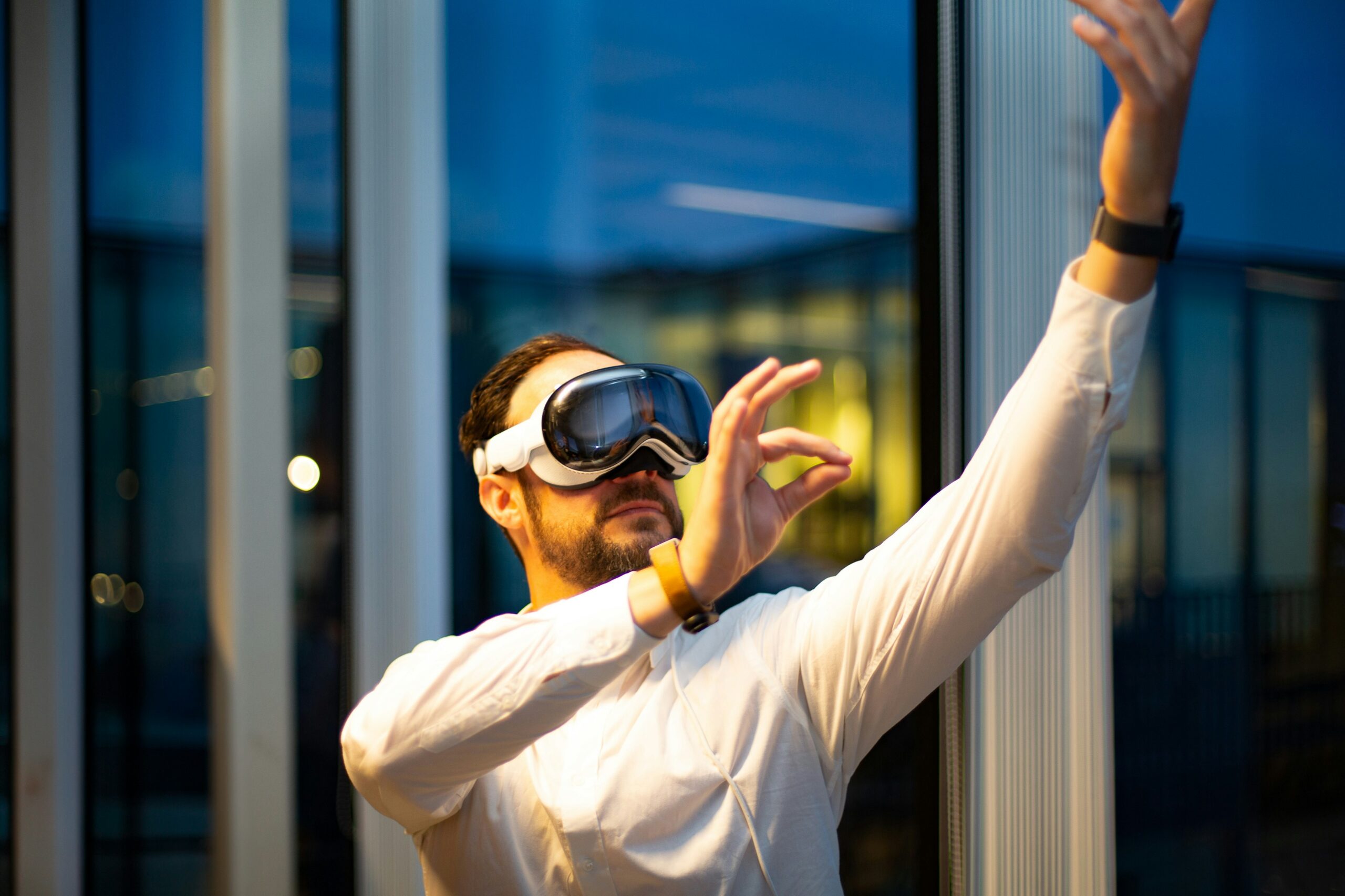


The headset gets the attention, but delivery is where most teams get stuck. The best Apple Vision Pro development companies usually stand out for simpler reasons: they understand visionOS constraints, spatial UX, and how to turn a concept into something people can actually use. Apple’s own developer guidance makes it clear that visionOS work depends on a mix of familiar frameworks and new spatial design rules, so execution matters early.
This space is still young, which makes the shortlist harder to trust. Some firms come from XR product engineering, some from iOS and digital product work, and some are adapting broader AR/VR capability into Vision Pro projects. The names below were pulled from a mix of official service pages and independent profiles rather than one recycled ranking.
Top VisionOS Development Agencies To Know
1. Treeview
Treeview is the clearest enterprise-first pick in this group. Its site frames the company as an XR studio for enterprise, with spatial computing work tied to major brands and a delivery model built around senior oversight, speed, and long-term partnership. That gives it a stronger product feel than many studios that still read like immersive campaign shops.
The practical value is in the structure. Treeview talks directly about end-to-end delivery, business impact, and shipping spatial apps that live beyond a demo phase, which is usually what larger buyers care about most.
2. nomtek
nomtek looks especially strong for teams that want top Apple Vision Pro app development tied to a fast pilot. Its Apple Vision Pro page spells out a one-week feasibility step, then a prototype and production build, with use cases spanning training, product demos, and productivity in sectors like aviation, automotive, and healthcare. Clutch also ties the company’s broader AR/VR work to Apple Vision Pro and Meta Quest deployments.
That process is the real selling point. If your team wants to validate a spatial product quickly before committing to a larger rollout, nomtek’s framing feels more grounded than a generic innovation pitch.
3. Big Human
Big Human is better known as a product design and engineering company, which makes it an interesting Vision Pro candidate. Its Vision Pro page ties the work back to its native iOS stack, strategy, UX, framework integration, and QA, while also saying the team has already built a visionOS-compatible app with passthrough and immersive mode. That makes it a reasonable option if you need to hire Apple Vision Pro developers through a product studio instead of a pure XR vendor.
What helps here is the tone. Big Human does not pretend every business needs a Vision Pro app, and that kind of restraint usually leads to a better discovery process.
4. Merge
Merge comes at Vision Pro from the product and design side, and that gives it a slightly different edge. The company’s service page focuses on building from scratch or adapting existing apps for visionOS, then backs that up with a structured sequence of discovery, roadmap, implementation, and support. It is a good fit for teams looking for top visionOS development agencies that think as much about product UX as technical delivery.
The second advantage is adaptability. Merge clearly positions itself around app porting as well as custom development, which is useful for companies that already have an iOS product and do not want to start over.
5. DevsTree
DevsTree presents a broader software profile, but its Vision Pro service page is detailed enough to take seriously. It lists consulting, full Vision Pro and visionOS builds, support for existing apps, upgrades, AR/VR development, and business apps, while also describing eye tracking, spatial audio, and RealityKit-driven rendering. That is enough to treat it as a credible visionOS app development company rather than just a general mobile vendor adding a new page.
The company also looks more accessible than some bigger names in the category. Clutch and the company profile point to a long-running team with a decent project base, which makes it a practical pick for buyers who want a broader dev partner with Vision Pro capability.
6. Volpis
Volpis is another useful option for teams that want Vision Pro work without going to a giant XR shop. Its dedicated Apple Vision Pro page leans into applied use cases like object recognition, visual search, real-time measurements, accessibility, and app experiences that connect with broader Apple workflows. Clutch reviews also point to strong communication, flexibility, and project management, which matters a lot more than slogans once the build starts.
This feels like a practical choice for product-minded companies. Volpis has enough AR context to sound credible, but it still reads like a software team first.
7. Queppelin
Queppelin rounds out the list as a more immersive-focused development partner with a clear Apple Vision Pro offering. Its page emphasizes tailored Vision Pro development, broad cross-industry applicability, and related XR credentials, while client-facing sections point to hands-on work in 3D environments, metaverse builds, and related visual products. That makes it the most obvious Apple Vision Pro software studio in this shortlist.
The appeal is breadth inside immersive work. If your project leans more toward spatial interaction, 3D assets, or experiential product layers than a conventional enterprise app port, Queppelin looks like a better fit than a standard mobile studio.
Choosing The Right Vision Pro Partner
The right fit depends on the kind of product you are building. Teams porting an existing app may get more value from firms like Merge or Big Human, while product-heavy XR work may lean more naturally toward Treeview, nomtek, or Queppelin. Apple’s own visionOS resources make it clear that spatial design, immersion levels, and framework choices shape the whole build from the start.
A good shortlist balances product sense, technical range, and shipped proof. The best Apple Vision Pro development companies are not just the ones with a service page live — they are the ones that can carry a Vision Pro idea from early validation into something stable enough to keep using.