In the ever-changing world of digital commerce, retailers face many challenges in reaching their potential customers.
Affiliate marketing has proven effective for reaching a large global audience and growing sales on a small marketing budget. This is a $17 billion industry where 15% of people earn over $50,000 annually.
Advantages Of Affiliate Marketing For Small Businesses
For small businesses with limited marketing budgets, affiliate marketing, if done correctly, offers a cost-effective method to drive traffic to your business and increase sales.
Enhanced social proof
The modern shopper checks out the social proof of a brand before making a purchase. Social proof humanizes your brand, strengthening credibility and developing trust with potential customers. An affiliate relationship proves to potential customers that someone believes in your product and is willing to endorse it.
A BrightLocal survey shows that almost 80% of consumers trust online reviews as much as personal recommendations. Another research showed that 95% of shoppers read online reviews before buying. Therefore, having an affiliate marketer endorse your brand is a solid strategy to build trust.
Cost-effective customer acquisition
99% of affiliate programs use the cost-per-action payment model. In this structure, an affiliate receives their commission only after a closed sale.
This approach is more effective than traditional marketing because businesses don’t have to pay for advertisements upfront. You also benefit from the existing customer base of an affiliate marketer, saving you the time and effort of building your own.
Improved SEO performance
Whenever small businesses partner with affiliates, they generate more backlinks to their websites, which helps to boost their search engine rankings. The impact of affiliate marketing on small business web traffic cannot be overstated. More than 69% of affiliate marketers implement SEO to drive visitors to their sponsors’ websites.
Better sales tracking
Affiliate programs offer real-time tracking software and metrics on clicks, impressions, and sales. They also provide custom lead conversion tools like email signups and form submissions. The ability to track the performance of your business helps you make future operational adjustments to your site. This can translate into higher online revenue and benefits for your business.
Tips For SMBs To Maximize The Value Potential Of Affiliate Marketing
Partner with affiliate marketers with a large audience to gain access to a huge consumer base
Work with top-rated blog owners with a proven track record to help you drive more sales
Encourage high-quality content that aligns with your brand values
The Future Of Affiliate Marketing For Small Businesses
As remote and hybrid work models become the norm, more and more people are quitting their jobs to become solopreneurs. Consequently, industries like affiliate marketing are becoming more alluring due to the passive income they bring.
Forbes Council Member David Gasparyan believes that affiliate marketing is only warming up. If you still feel unsure about whether affiliate marketing saves the day or poisons the well, remember that incorporating an affiliate program into your marketing mix doesn’t mean you have to go all out. Many small businesses limit their affiliates to promoting a single offer in order to simplify promotion and commission tracking.
Conclusion
Affiliate marketing is here to stay. If you want a piece of the pie, start building an affiliate-friendly brand. Get marketers who have a large following online, and personalize your affiliate marketing offers to their audiences.
Packaging, Storage, and Accessories go hand-in-hand in e-commerce issues for the safety of each product to the customer, enhancing customer experience, and promoting brand identity. Having gone through it, you will understand all the key aspects of these constituents for the effective optimization of e-commerce operations.
Importance of E-commerce Packaging
Here are some of the important factors for e-commerce packaging:
1. Custom Packaging for E-commerce
Custom packaging for e-commerce is more than simply a compartment for your items; it is an expansion of your brand and a significant touchpoint for client collaboration. By utilizing custom packaging, organizations can produce an entirely vital unpacking experience, driving client faithfulness and positive informal exchange marketing.
Brand Identity: Custom packaging is one sure and efficient way to drive brand identity. It creates a cohesive brand experience right from the doorstep—right from when the package arrives at the customer’s doorstep—with the logo, brand colors, and stand-out design elements.
Customer Experience: Valued additions that a good package design would give would be to the overall customer experience. Easy-to-open designs, beautiful graphics, and messages of ‘special’ treatment raise feelings of being valued and appreciated among customers.
2. Eco-Friendly Packaging for E-commerce
With extended consciousness of the environment, clients are reaching organizations for eco-friendly packaging for e-commerce. Reasonable packaging continues to diminish your environmental footprint and draw in eco-mindful clients.
Design: Reduce over-packing and use a design that ensures less usage of material but always has protection in mind. One such example can be right-sizing your packaging—many wastes can be saved from this.
3. Protective Features
The e-commerce packaging will be presented to many regions for taking care of and shipment; consequently, defensive elements ought to be incorporated into the mission so as not to harm the items.
Cushioning: Use bubble wrap, air pads, or biodegradable pressing peanuts to pad delicate things.
Waterproofing: Guarantee that your bundling materials secure the item from water and other normal components that could prompt its obliteration.
Effective E-commerce Storage Solutions
The following list includes some effective e-commerce storage solutions:
1. Climate Control
This is required mainly for foodstuffs and all electronic devices to ensure a well-maintained environment that can prevent the perishing or damage of items.
Packaging Coffee Beans: With regards to packaging coffee beans, freshness is the main concern. Encompass them in water/airproof packs with one-way valves to guarantee that the flavor will not leak out and no dampness or air can get in.
Temperature and Humidity Control: Try to outfit your stockroom with environment control frameworks to keep up with the temperature and stickiness levels for which your items were planned.
2. Warehouse Organization
Coming up with an effective storage solution is very crucial in managing inventory and ensuring orders are filled effectively. Good organization in the warehouse may pay back time by way of streamlining operations and reducing errors.
Categorization: Store identical or closely related products under one category with clear labels. In that way, it will give an easy way of locating the products and storing the inventory.
Shelving Systems: The sturdy shelving systems will turn quite handy in maximizing vertical space. Adjustable shelves accommodate different product sizes and quantities as well.
Micro Fulfillment Centers: For businesses aiming to deliver items quickly and efficiently, establishing micro fulfillment centers in key locations can be highly beneficial. These smaller, strategically located centers can store high-demand items in climate-controlled environments to improve delivery speed and maintain product quality.
3. Inventory Management Systems
Any good inventory management system will ensure you get to know your stock levels and when to order so that overstocking or having stockouts does not occur.
Automation: Design software that goes with an e-commerce website to understand inventory updates.
Real-time Tracking: It helps in tracking the inventory levels and also spot trends in demand for particular products.
Top E-Commerce Packaging Accessories
Below are some of the essential accessories required for e-commerce packaging:
1. Seals and Tapes
One of the significant purposes behind the packaging is to safeguard the items from being altered during transportation. Sedated drugs, food things, and other buyer products are in danger without secure bundling.
Tamper-Evident Seals: Alter obvious seals to add that additional piece of safety and assist with consoling clients that the item they have gotten hasn’t been opened or altered.
High-Quality Tape: Put resources into bundling tape that will want to hold up under a wide range of kinds of dealing with circumstances and keep your bundles very much fixed.
2. Labels and Tags
The key to effective order fulfillment and satisfied customers lies with proper labeling.
Shipping Labels: The clarity and readability of the shipping label, plus how well it’s attached, make a world of difference. All information needs to be placed on the shipping labels, including the recipient’s address and the tracking number.
Product Tags: It is a place for hook where more information regarding a product can be conveyed to the customers at the time of shipping. This might have to do with the care instructions or special offers.
3. Inserts and Marketing Materials
Extra inclusions in the form of inserts and marketing material give added value to your customer experience and build brand loyalty.
Thank-You Notes: These small things, such as a thank-you note leaving a message, likely make them feel special and important about being customers.
Discount Codes/Promotional Offers: This sends a very strong message to want repeat purchases.
Brand Story: Share your story or brand mission statement; this common ground binds the customer to the brand at a much deeper level.
Conclusion
Make sure you have the best possible packaging, storage, and accessories for your e-commerce needs so that it helps in the protection of your products while enhancing customer experience and brand loyalty. With custom and eco-friendly packaging solutions, efficient storage, and highly sought-after accessories, you will be on your way to delivering a smooth and delightful experience for customers.
A founders’ agreement is an essential document to have for any startup. It spells out each founder’s roles, responsibilities, and rights and helps smooth operations by avoiding potential disputes. Challenges are part of any startup, but with clear agreements, one is better equipped to handle them.
Forbes contributor, Tina Baker, insists on the very necessity of this kind of agreement. “It is naïve to think that the honeymoon will last forever and that you won’t fall out with your co-founder,” she says. She adds that this document protects not just the co-founders but also the company in the event of a dispute.
Everything You Need to Know About a Founders’ Agreement
Why you need a founders’ agreement
A founders’ agreement brings clarity to startup founders. It defines the roles and contributions of each founder, hence reducing friction and keeping everybody on the same page. This clarity is very critical to maintain harmony and focus inside the team.
A founder’s agreement provides clarity concerning the roles and dictates what is best for the business and personal relationships of the owners. It’s akin to a prenup.
Many startups fail due to internal conflicts. A founders’ agreement at the very beginning can mitigate such risks. The startup agreement outlines not just the present roles but also future expectations. It helps avoid future co-founder disputes.”
Without a Founders’ Agreement, your new company could be derailed by disputes about equity, roles, and the decision-making process. On the other hand, with a written agreement, you will epitomize the sharing of a shared vision at this stage in understanding the roles each founder must take up.
8 Steps to on how to create a founders’ agreement
Step 1. Definition of roles and responsibilities: Specify the roles and domains of authority of each founder to avoid any potential conflict in the future.
Step 2: Outline ownership and equity: How much of the company does each founder own and under what kind of vesting schedule?
Step 3: Dispute resolution: State methods of resolving disagreements, whether by arbitration or mediation.
Step 4: Address intellectual property: Who owns the intellectual property, and what happens to that IP if a founder leaves?
Step 5: Founder’s departure or removal: Establish the procedures if someone resigns, is removed, or dies.
Step 6: Discuss financial contributions: Include details about initial capital contributions and how future expenses will be managed.
Step 7: Legal review: Have a lawyer review the agreement for its legal soundness.
Step 8: Signing and storage: The agreement is to be signed by all Founders and kept safely with a founder for referencing when needed.
Challenges and solutions
While preparing the founders’ agreement, co-founders may have different views regarding some key points; this may consume their time. Such conversations can be conducted by lawyers who ensure all the views are considered while helping the founders reach a consensus to create a balanced agreement.
Books such as “Venture Deals” by Brad Fred give practical advice on this. Brad recommends, “Bringing in a neutral third party to help founders find consensus on tough issues.” The mediator will analyze the situation and help the founders come up with an appropriately weighted share distribution.
Conclusion
The founders’ agreement is a significant starting point for the formulation and execution of a successful and resilient business venture. It is far from just a piece of paper. It outlines the future relationship of the co-founders and aligns everyone’s actions and intentions towards a common goal.
According to Global Newswire, FinTech industries will grow at a remarkable CAGR of 23.84% to reach USD 124.3 billion by 2025. Technological innovation and progress are the drivers that will continue to shape the competitive nature of finance for the next decade.
Let us dive into the top 5 technologies shaping finance and examine their potential to improve your business ROI.
Top 5 Fintech Trends To Watch In The Next Years
1. Cloud computing
Research by McKinsey reveals that cloud technology will surpass $1 trillion in terms of EBITDA (earnings before interest, tax, depreciation, and amortization) for the world’s top Fortune 500 companies. The research shows that cloud computing frees financial institutions from undertaking non-core business activities like infrastructure management while providing agile computing services and flexible storage at lower costs.
In the data security arena, finance institutions are increasingly using cloud computing to enhance their security with the help of automation and cloud-native security tools. In addition, cloud data warehouses are more dependable than legacy IT ecosystems because they incorporate features like data encryption and zero-trust verification to protect against data leakage and fraud more effectively.
2. The “Buy Now, Pay Later” model
In light of the regulations strangling traditional financing and the current global economic slowdown, BNPL is emerging as a successful financing model for consumers to access instant, interest-free, short-term loans by bypassing the traditional credit process. In this space, Fintechs have so far hijacked $10 billion from traditional banks (data by McKinsey’s Consumer Lending Pools).
Finance institutions that dismiss this threat will see a continuous decrease in their market share. To avoid this pitfall, banks must begin to understand how point-of-sale financing and other emerging models will affect their operations in the future.
3. Blockchain
Distributed Ledger Technology (DLT) is upending the entire FinTech app ecosystem by enhancing how finance systems record, share, and synchronize data across multiple data repositories.
Existing fintech innovations like decentralized finance (DeFi), digital assets, and non-fungible tokens (NFT) rely on blockchain technologies like zero-knowledge proof, smart contracts, and distributed data storage and exchange.
Institutional investors are increasing their investments in digital assets, a move that will open up new opportunities for DTL to disrupt established markets. An example of the growing technology value of blockchain is DeFi, whose total locked-up value (TLV) has surged to $50 billion in digital assets from $35 billion six months ago.
4. Deep learning
Many companies are turning to robotic process automation (RPA) to handle repetitive, time-consuming human tasks, such as data entry, invoice processing, and compliance reporting. The banking industry is also increasingly using these automation services to improve problem-solving capabilities and boost employee efficiency.
JPMorgan has pioneered RPA to increase its efficiency. The banks’ CoiN technology can review 12000 loan documents in seconds – a process that used to take up to 36,000 hours of manual scanning.
5. Low code/no code
Grand View Research shows that banks will spend around $21 billion on banking software by 2030. The problem is that there aren’t many top-notch professionals capable of quickly developing banking systems. That’s why low-code/no-code development has become indispensable for banks to accelerate their digital transformation with agile solutions.
Other low-code/no-code solutions in FinTech can help to generate invoice online, accelerate the process of onboarding clients, navigate logical hurdles occasioned by traditional and local laws, or even liberate limited R&D resources to allow traditional institutions to work on several projects simultaneously.
Conclusion
In the future, the above key technologies will push the financial sector to greater heights of profitability. Traditional financial institutions will be forced to invest a lot of resources in these technologies to ensure they stay on top of trends.
Many small business owners are apprehensive about supply chain chaos, rising inflation, and disruptions caused by recent conflicts. While a PYMNTS’ Study revealed more than half of SMBs experienced revenue growth in 2023, a majority worried that they might not remain afloat into 2024.
Are you worried about your businesses’ capability to weather the looming economic storm forecasted for 2024? Here are more risks to consider so you are not blindsided.
Top 4 Business Risks To Expect In 2024
1. Gen Z’s reluctance to work
Working 9-to-5 isn’t everyone’s cup of tea. A recent McKinsey report shows that 50% of people between 16 and 25 want more freedom, flexibility, and work-life balance. For many Gen Zs, becoming an entrepreneur is the surest path to achieving this.
Gen Zs have flocked to TikTok to express their frustrations with work culture. As a result, the search term “remote work” has exploded in popularity, with associated videos gaining up to 3 billion TikTok views. A recent TikTok video by Mik, alias @ginger4567, has taken the internet by storm. She explains why Gen Zs want a different work formula.
2. Geopolitical risks
The latest Oxford report shows that geopolitical unrest is a source of worry for small businesses. Tensions related to issues over the South China Sea, Russia – NATO, and the Middle East wars are causing jitters over supply-chain disruptions.
Back home, the upcoming US elections add uncertainty to an already bleak economic situation. A New York Times survey released recently shows that a staggering 81% of voters feel that the state of the US economy was “poor” or “fair” compared to 19% who thought it was “Good.” Businesses will find it hard to plan for the future until the political and economic landscape is more stable.
3. Inflation
In a July 2023 survey, small business owners quoted rising inflation as their most pressing concern. 38% of the respondents cited it as their biggest concern, a jump from January when inflation was the primary dilemma for 23% of business owners.
The rising inflation trend is set to continue in 2024. Raphael Bostic, Fed Reserve President for Atlanta, told CNBC that he doesn’t anticipate interest rate cuts until late 2024. Inflation figures for 2024 will be at 2.6%, a figure that is above the Fed’s target of 2%.
4. ESG Laws
2023 saw the enactment of significant climate bills into law. These laws will take effect in 2024 and beyond, setting the stage for tumultuous times in corporate sustainability. Businesses will move away from voluntary sustainability reporting to mandatory.
The 2023 California climate disclosure bill, in particular, mandates reporting by 2026, meaning businesses should start complying by 2024. Also, the NYC Climate Department recently introduced new mandates governing cooking stoves in city restaurants to reduce emissions by 75%. The rules enraged pizzeria owners, restauranteurs, and customers, highlighting the ineffectiveness of the solution. The new regulation targets small business owners.
Conclusion
Each business is unique and will face its own set of challenges in 2024. It is important for business leaders to understand how the changing world will impact their bottom line. The good news is that you will find it easier to survive and grow if you anticipate and plan for the above concerns.
Why stick to static pricing when customers want flexibility?
Ever tried selling fabric online? Or tiles? Or paint? You quickly realize—one fixed price doesn’t cut it. A customer wants 2.3 meters. Another one asks for 5 square feet. Somebody else says, “I just need half a liter.” You can’t list hundreds of variations manually. Too much. Too messy.
So, what’s the fix? Pricing calculators. They do the math for you. Customers enter measurements. The system spits out the price. Done. No confusion. No hidden tricks.
This is why WooCommerce pricing calculators are such a big deal. They bring fairness. They bring flexibility. And honestly, they make you look more professional. In this article, we’re going to walk through the best WooCommerce pricing calculators out there. Real tools. Real features. No fluff.
Why Do You Even Need a Pricing Calculator?
Picture this. You run an online flooring store. A customer needs 245 square feet of marble tiles. What do you do? Create a variation called “245 sq. ft.” and hope for the best? That’s impossible.
This is where calculators shine. They take input. They calculate. They show price instantly. No back and forth. No spreadsheets.
And it’s not just tiles. Cloth. Glass. Liquids. Furniture parts. Even cakes by weight. They all need dynamic pricing. Customers like it because it feels fair. Businesses like it because it stops errors. Everybody wins.
Benefits: Why These Calculators Matter
Let’s keep it simple.
Prices change instantly.
Customers see exactly how the price was calculated.
Works for weird sizes.
No need to create 100+ product variations.
Bulk discounts become easy.
Inventory updates correctly.
Shoppers stop abandoning carts because pricing feels clear.
Your store looks modern. Like you know what you’re doing.
That’s the core. Now let’s dive into the best ones.
10 Best WooCommerce Pricing Calculators for Dynamic Product Pricing
1. WooCommerce Measurement Price Calculator
This one’s a classic. Trusted. Solid. If you sell products by length, area, volume, or weight, this is your go-to.
Features:
Shoppers type in measurements.
Price updates instantly.
Works with both simple and variable products.
Let’s you set min and max order limits.
Imagine this. You’re selling cloth. A customer needs 2.75 meters. They punch it in. The plugin calculates the exact price. They smile. You smile. Transaction done.
That’s the beauty of it. Straightforward. Reliable.
2. WooCommerce Price by Quantity Calculator
Not every product need measurement fields. Sometimes it’s just about how many. Bulk. Packs. Cartons.
Features:
Price adapts based on quantity.
Easy bulk discounts.
Works like magic for wholesale sellers.
Think of a stationery shop. A single pen costs $2. Buy 50 pens? Price drops. Buy 200 pens? Even cheaper. No arguing. No manual adjustments. This plugin makes sure the pricing scales up or down automatically.
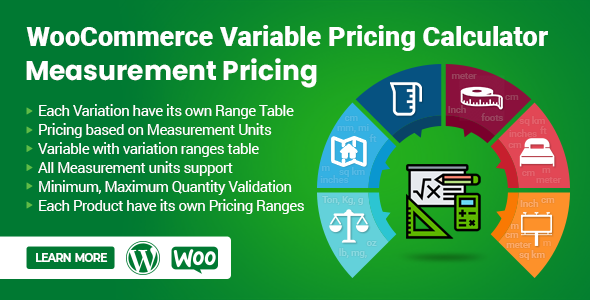
3. WooCommerce Variable Pricing Calculator
This one is powerful, especially if you deal with multiple variations. Like fabric in cotton, silk, and velvet. Each one with its own pricing rules.
Features:
Each variation gets its own pricing table.
Works with length, weight, area, and volume.
Unlimited ranges.
Stock tracking per variation.
Min and max order limits built-in.
Here’s a scene. You’re selling tiles. White tiles cost less. Black tiles? A bit more. Marble tiles? Premium. Instead of juggling everything under one messy table, this calculator lets you assign separate pricing structures for each variation. Cleaner. Smarter. Less stress.
That’s why it’s called WooCommerce variable pricing because it adapts.
4. WooCommerce Dynamic Pricing and Discounts
Not strictly about measurements. But still a giant in the pricing world. Why? Because people love discounts. And this plugin makes them happen.
Features:
Bulk deals.
Buy-one-get-one style offers.
Tiered pricing.
Cart-based rules.
A simple story. A customer adds three T-shirts to the cart. Bam. Price drops automatically because of your bulk discount rule. They decide to add two more. Price drops again. Suddenly, they’re spending more than they planned. And you? You’re smiling again.
This plugin is less about “how much” in size, more about “how much” in volume of sales. But trust me, it works.
5. WooCommerce Price Based on Country Calculator
Selling worldwide? Different story. Customers don’t want to see US dollars if they’re in Germany. They want euros. Or pounds. Or yen.
Features:
Detects country automatically.
Converts to local currency.
Updates with exchange rates.
Simple integration.
It’s not about measurement. It’s about psychology. A customer trusts your store more when they see prices in their own currency. It feels local. Safe. That’s what this plugin delivers.
6. WooCommerce Custom Product Price Calculator
This one’s for custom orders. Like banners. Glass panels. Signs. Anything made-to-order.
Features:
Customers enter dimensions.
Price appears instantly.
Supports flexible fields.
Let’s say you’re selling custom posters. A buyer wants 18 inches by 24 inches. They type it in. The plugin calculates the cost. Done. No emails. No quotes. Just business flowing smoothly.
Sometimes products are made of parts. A computer. A gift basket. A modular sofa. Each part has its cost. The total adds up.
Features:
Add multiple components.
Pricing calculated automatically.
Works for both fixed and dynamic setups.
Example. A customer builds a computer in your store. They pick a processor. Add RAM. Add a graphics card. Each choice updates the price. By the end, they see the total. It feels interactive, like building something themselves. That experience is powerful.
8. WooCommerce Area and Volume Pricing Calculator
A very focused plugin. Perfect for construction materials, Paint. Flooring. Liquids.
Features:
Price based on area or volume.
Simple to configure.
Works with variable and simple products.
Think of a paint store. Customer needs 3.5 liters. Not a full gallon. Not a tiny can. They input their number. The calculator sets the price. Easy.
It takes the guesswork out of odd orders. And that’s the whole point.
9. WooCommerce Name Your Price Calculator
This one flips the script. Instead of telling customers what to pay, you let them decide—within limits.
Features:
Customers suggest a price.
You set min and max rules.
Works great for donations and fundraisers.
Imagine running a charity store. A supporter wants to pay $20 for a T-shirt instead of the base $15. With this plugin, they can. The extra $5? Straight to your cause. That flexibility makes people feel good. And feeling good sells.
10. Advance Pricing Calculator for WooCommerce
This plugin is a lifesaver for stores that deal with measurement-based products. Instead of sticking to static prices, it lets you apply advanced formulas. Customers enter values—like length, width, area, or weight—and the system calculates the price instantly. No guesswork. No manual math.
Features:
Dynamic measurement-based pricing for variable products.
Advanced formulas for complex cost calculations.
Automatic unit conversion for customer inputs.
Discounts based on quantity ranges.
Stock management is linked with product variations.
Minimum and maximum input validation.
Custom input fields with clear labels.
Real-time price updates as shoppers type.
Full WooCommerce checkout compatibility.
For example, you run a store selling glass panels. A customer needs a custom size—120 cm by 80 cm. They enter the dimensions. The plugin does the math. Price shows up instantly. They buy. You don’t have to lift a finger. That’s the magic of the Advance Pricing Calculator.
Choosing the Right Calculator
Here’s the deal. Don’t grab a plugin just because it looks fancy. Think about your store.
Selling by size? Choose measurement calculators.
Selling wholesale? Go with bulk calculators.
Selling custom stuff? Pick one with input fields.
Running discounts often? Get the discounts plugin.
WooCommerce pricing calculators give that. Whether you’re selling fabric, flooring, or digital subscriptions, there’s a tool for you. These plugins don’t just simplify business. They also boost trust. And when customers trust your store, they buy more.
So, stop thinking small. Stop forcing buyers into fixed-price boxes. Explore these WooCommerce pricing calculators. Pick the one that fits. And turn your store into a dynamic, customer-first marketplace.
Here is something agencies don’t want you to know: blanket messaging leads to zero outcomes for small businesses. Audience analysis should never be overlooked if the goal is to accelerate growth and maturity. Without it, you are pouring money down the drain.
Consider this hilarious example. A company that sells a luxury SUV brand fails to research its target audience and chooses to market to a broader demographic. They later realize their premium brand doesn’t appeal to most potential customers. Meanwhile, they have wasted thousands of dollars in advertising.
Lack of proper market research reduces awareness about target customers, leading to many missed opportunities in sales. If the same automotive startup identified its target audience as young, high-income individuals interested in car customization, they would have saved money and expedited growth.
The Impact of Failing to Define Your Target Audience
Here are some reasons why it is dangerous for startups to market to an undefined target audience.
1. Resource wastage
Check this out. A study showed that advertisers waste $37 billion yearly by failing to target the right audience. Focusing on a narrow demographic can help you communicate your message more effectively and increase your return on advertising. Start with the basics, such as age, gender, and location, and build comprehensive buyer personas from there.
2. Zero feedback
If you market to people who don’t care about your products, you won’t get any responses from them. As a result, you won’t have any data to guide your people in research and development or product improvement. That’s right. Small and new businesses alike thrive on customer feedback. Positive reputation is the X factor for success. Feedback and good reviews are only possible to obtain if you target the right users.
3. Wrong channels
Here we go again. There are more than 100 channels to try, and if you put your marketing budget in all these places, you will stretch yourself thin. You may go bankrupt. Audience research provides insights into potential media your audience uses, the content they love to read, for instance, the sites they frequent, and even places they like to hang out. In-depth market analysis will reveal insights about the best places to reach or meet your audiences, whether on TikTok, Linkedin, or a local festival, and this can massively save your time and money.
4. Copycat tag
Let’s face it. It is difficult for a brand to stand out from its competitors if it replicates everything everyone does. The key to differentiation is understanding your customers and their unique challenges, ambitions, and inspirations. From there, you can shape your branding and messaging to reflect who your customers are and what they want uniquely. Imitation is costly when it comes to marketing because you will never be as good as the original.
Conclusion
Startups are naturally limited in the amount of resources they can invest in marketing. Failing to identify the right target audience makes things worse. It leads to disastrous consequences, such as wasting resources, low engagement, and low conversion. Audience analysis is the foundation for startup marketing success.
Tax Receivables Agreements (TRAs) are becoming the next big thing in mergers, acquisitions (M&A), and initial public offerings (IPOs).
Think of them as a way for pre-IPO owners or sellers to cash in on future tax savings, turning tax perks into real money they can use. That’s why they’re becoming such a big deal in financial transactions.
Understanding TRAs is not only helpful but critical for any investor, business owner, or anyone involved in corporate finance. Let’s break it down.
What’s A Tax Receivable Agreement (TRA)?
A TRA is a deal between a company and its pre-IPO owners or sellers. It allows them to tap into future tax savings, often tied to depreciation, amortization, or net operating losses, turning tax benefits into real financial value.
When pre-IPO owners trade in their partnership units for company shares, something interesting happens, a tax-friendly ‘step-up’ in asset value. This step-up boosts the tax basis of the company’s assets, leading to bigger tax deductions over time. That step-up leads to bigger tax deductions, which means lower tax bills and that’s where the TRA comes in. The company agrees to share these savings with the original owners.
TRAs are especially common in Up-C structure IPOs, where pre-IPO owners get paid based on actual tax savings. But they’re also popping up in private M&A deals, where buyers and sellers need a creative way to settle differences over tax assets. Companies leveraging additional tax incentives, like the sr&ed tax credit, can further optimize their tax positions, maximizing savings that contribute to long-term financial growth.
How Do TRAs Affect A Company’s Value?
TRAs can boost a company’s value, but they also add complexity. Lower income taxes mean more profit which should be great news, right? But there’s a catch. The company also has to share some of those savings with TRA holders, which adds another layer of complexity.
Figuring out a company’s worth when a TRA is in play isn’t as simple as crunching a few numbers. You have to look at its earning potential, expected tax savings, and future TRA payment obligations. While TRAs add value, they also make valuations trickier.
How Is A TRA’s Value Determined?
Here are some of the biggest factors that influence the value of a TRA:
1. Future profits
A TRA’s value largely depends on how much taxable income a company is expected to bring in. More profits mean bigger tax savings. But predicting future earnings isn’t straightforward, it takes smart financial modeling and a fair amount of forward-thinking.
2. The step-up effect
The step-up is probably one of the most important pieces in the valuation puzzle. It’s like the foundation of a TRA. Pre-IPO owners often swap their partnership units for shares, which boosts the tax basis of the company’s assets, leading to larger tax deductions.
3. Tax rates and policy changes
The lower the tax rate, the lower the value of a TRA. Tax rates go a long way in determining TRA benefits. The biggest winners are always companies in high-tax areas. Staying ahead of policy shifts is key because a few changes in tax laws can really shake things up.
4. Risk factors and present value
There’s no guarantee that future TRA payments will pan out as expected. Several risks come into play, including:
Credit risk – Can the company afford to make TRA payments?
Timing risk – When will the tax benefits materialize?
Regulatory risk – Will tax laws stay the same?
All these factors affect how we calculate the present value of a TRA today.
TRAs In M&A Deals
TRAs have turned into a valuable tool in M&A negotiations. Buyers and sellers don’t always see eye to eye on the value of tax assets, what one side sees as a goldmine, the other might dismiss as uncertain. A TRA helps bridge this gap by ensuring sellers get paid only if the expected tax savings come through.
Here’s why that works:
Buyers don’t have to overpay for uncertain tax benefits.
Sellers can still capture long-term value from tax savings without upfront disputes.
Making deals smoother and more appealing for both buyers and sellers.
How TRAs Create Long-Term Value
For companies preparing for an IPO or a major transaction, a TRA is almost like an ace up your sleeve. It means both pre-IPO owners and sellers can have a say in the company’s future tax benefits.
TRAs also allow tax assets that might otherwise sit idle to be put to work. Depreciation, amortization, and net operating losses. Instead of letting them go to waste, TRAs convert them into financial benefits.
Conclusion
TRAs let pre-IPO owners and sellers benefit from future tax savings, adding financial value to transactions.
They impact business valuation by influencing future cash flow and tax obligations.
Several factors affect a TRA’s value, including income projections, tax rates, and associated risks.
When it comes to M&A deals, TRAs help smooth out valuation disagreements by linking payments directly to real, measurable tax savings.
A well-designed TRA keeps everyone on the same page, aligning incentives, adding stability, and making the company more appealing to investors.
With TRAs becoming more common in today’s deals, knowing how they work isn’t just nice to have, it’s a must. Whether you’re buying or selling, understanding TRAs can give you a real advantage when it comes to negotiating and making smart investment moves.
Many business leaders agree that technology transformation is essential to adapt to future challenges and meet strategic growth goals. According to a Deloitte study, 85% of CXOs have accelerated their digital maturity strategies since the COVID-19 pandemic.
This transformation involves harnessing new technologies, operations, and cultural shifts to drive innovation, improve efficiency, and satisfy the voracious digital appetites of consumers.
However, digital transformation strategies must not always be about just technology. It is important to implement the need for strategic approaches tailored to the organization’s unique needs and goals.
Here are some technology transformation approaches that have proven effective in driving successful digital migrations.
Technology Transformation Blueprint For Business
1. Customers come first
Making data-driven decisions and prioritizing customer satisfaction is essential. organizations must understand that their success depends on how well they treat customers. Customer centricity must be evident in tech transformation strategies. A McKinsey report shows that 70% of technology transformation approaches fail to meet their goals because they lack a customer-first approach.
Established companies trying out AI-readiness strategies often face stiff competition from new digitally advanced companies. These agile businesses have a clear edge – they have implemented digital solutions from the beginning and are unburdened by legacy systems. In comparison, older companies may leverage tech transformation merely for parity with peers instead of striving for a competitive edge.
A customer-centric approach at the center of your tech transformation also allows you to cut costs and increase revenues exponentially.
Consider Airbnb, Spotify, or Uber. These companies formed their tech transformation strategy around data about their customers’ personalized experiences. This has propelled these companies to become some of the most successful in the world.
2. Agility is the key to success
Many CIOs agree that tech transformation is complex because it requires the organization to overhaul its DNA and business model. Furthermore, the COVID-19 pandemic forced CIOs across industries to undertake their digital transformational journeys, and many best practices and experiences have been born out of their experiences.
One such best practice is applying agile frameworks and principles across a company’s digital implementations. Work with cross-functional teams to break the tech transformation initiative into shorter iterations with a testing-and-learn process for each stage. This way everyone from the C-suite to the junior desk can participate in the AI-readiness strategy and ensure it aligns with the realities of the business environment.
3. Digital strategy must support innovation and expansion
According to IDC, by 2027, 75% of market leaders will implement systemic, structured, and technology innovation programs to support continual innovation, facilitate expansion, and enhance agility. However, arriving there requires aligning their digital maturity initiatives with the business’s strategic goals.
While this may sound obvious, companies must take this fundamental step to ensure the transformation succeeds. In many unfortunate scenarios, the CTO and their team are siloed independently, leading them to focus on tech rather than business problems.
Conclusion
Businesses must harness technology effectively to remain competitive and succeed in the digital world. Regardless of the technology transformation approach a company takes, it needs a holistic approach involving a strategic reorientation of its business operating model.
In today’s fast-paced business environment it is exceedingly difficult to do more than draw in and hold any potential investors, clients, or partners attention for longer than a couple of minutes. It is often the case that traditional text-based presentations don’t make the necessary impression. This is where text to video converters take their place in history, transforming the nature of business pitches in both word and deed.
The Power of Visual Storytelling
Visual substance is handled multiple times quicker than text and can in this way be an extremely strong specialized devicel. With business pitches, paying attention to the visual side of things can really make sure your message has the effect you want. Text to video converters let you turn flat, static words into active, engaging video content that will make your pitch stand out.
Benefits of Using Text to Video Converters
1. Enhanced Engagement: Videos are innately more engaging than text.si A text to video generator allows you to produce appealingly visual presentations that will grab your audience’s undivided attention for a longer period of time, increasing the likelihood they will remember your message.
2. Many Different Types of Information: It is always possible to try seemingly complicated explanations in plain-text newspapers. Text to video converters render that sort of effort into merely a few easily digestible video sections, so your audience can both grasp and remember the material.
3. Consistency in Messaging: Using video ensures that each time you deliver your message, it’s always with the same clarity and force. A live presence may vary somewhat, but a video pitch does not; all watchers receive exactly what you wanted to tell them.
4.Wider Reach: Videos can be shared easily on a variety of platforms such as social media, email and websites. A persuasive film pitch can extend your audience’s net, plus get your business proposal in front of more people.
Steps to Create a Compelling Video Pitch
1. Start with a Strong Script: The underpinning of any great video pitch is a very much created script. Frame the central issues you need to pass on and guarantee your message is clear and brief.
2. Leverage Visuals and Graphics: Use visuals, graphics, and animations to complement what you say. The text to video converters often come with templates and other design elements that can help you create a professional-looking video without requiring advanced design skills. Meanwhile, an editing app can also add brillo to the finished product, allowing for very precise tuning and polish.
3. Incorporate Voiceovers: A clear and confident voiceover can improve the quality of your video tremendously. The majority of text to video generators will let you add a commentary over the top of your video or replace it entirely with AI voiceovers.
4. Short and Sweet: People’s patience is limited, and so are will be their corporate At the same time, aim to keep the video pitch below 3 minutes, concentrating on the most crucial points of your proposal.
5. Call to Action: Conclude your video with a passionate call to action, guiding your audience as to what actions they need from here, be those arranging a meeting time and location for you, signing a contract on the spot itself, or going over to your Web site website for further information on all this.
Real-World Applications
Many firms now build text to video converting mechanisms in their pitches. As an example, at the beginning stage of company creation, startups don’t use those tools to good effect by preparing highly effective speeches for investors that are highlighted in upbeat films. These presentations carry the startup’s unique basic advantages and market potential to life through exciting new videos. At the same time, marketing teams use video pitches to attract and bring in customers who have only been just won over, showing the team and business’s offerings their successful models of operation in a form more compelling than simply hobnobbing in some KTV.
Conclusion
If you incorporate the text to video converters into your business pitches, then you can make a radical improvement in the way you communicate with potential investors. By means of the visual power of storytelling, simplifying complicated data, and ensuring your message stays the same in every place it is heard, such tools can enable your created pitches to be not just powerful but lasting.
As business conditions change, ever-new techniques will be in desperate demand when it comes time to present in the way innovative presentations such as text to video will be essential for success. Using a text to video generator will change your business communication, making your pitches more effective and your message more powerful. Embrace this technology to keep up with the competition and leave a lasting impression on your audience.