
.svg)
Spatial projects can look polished in a demo and still fall apart in production. The firms worth shortlisting know how to manage interaction design, 3D assets, device limits, and rollout details without turning the job into a drawn-out experiment. That is what separates the best spatial computing development companies from teams that only sell the idea.
A quick way to frame what is spatial computing is this: software that understands space, objects, and movement well enough to place digital content into the physical world in useful ways. The market is wider now, so the shortlist below mixes enterprise builders, immersive product teams, and platform-driven players instead of copying one directory’s order of the top spatial computing development companies.
.png)
Treeview is a strong first pick because it is built around enterprise XR rather than campaign work alone. Its site puts spatial computing software front and center, with client signals that include Microsoft, Meta, Medtronic, ULTA Beauty, Daiichi Sankyo, Transfr, the University of Alberta, and NEOM. That gives it unusually solid proof for buyers comparing the top spatial computing development companies.
The studio’s pitch is clear: senior-led delivery, startup speed, and long-term partnership. Public case-study titles also point to practical work such as digital twin visualization, cultural preservation, and AR navigation — not just flashy prototypes.
.png)
SoftServe brings a larger consulting and engineering profile to the list. Its XR and spatial computing practice ties immersive work to internal operations, product delivery, robotics, IoT, and NVIDIA Omniverse, which makes it one of the best spatial computing companies for enterprise programs that need more than a standalone app.
That broader systems angle is the draw. SoftServe looks strongest when spatial work has to connect with existing workflows, data, and infrastructure — especially in industrial or operational settings where isolated demos are not enough.
.png)
Magnopus comes from the immersive production side, but its portfolio makes it hard to ignore. The studio describes itself as a builder of ambitious immersive experiences across entertainment, education, and adjacent sectors, and its public projects include Meta, Disney, Nissan, the Academy Museum, and Fallout-linked work. That makes it one of the leading spatial computing development studios for brands that want real technical depth with strong creative execution.
Its strength is range across formats and platforms. Magnopus is a better fit when the brief spans mixed reality, real-time environments, and shared interactive worlds rather than a single narrow use case.
.png)
PHORIA adds another flavor to the shortlist. The studio presents itself around AR, VR, MR, XR, digital twins, and installations, and public project signals include collaborations tied to Netflix, Google, OnePlus, and Meta. That mix gives it a credible place on this list without making the selection feel like the usual agency circuit.
The appeal here is how comfortably it moves between storytelling and technical build work. PHORIA feels strongest when a project has to be visually sharp, interactive, and grounded in a real deployment plan — not just a concept film.
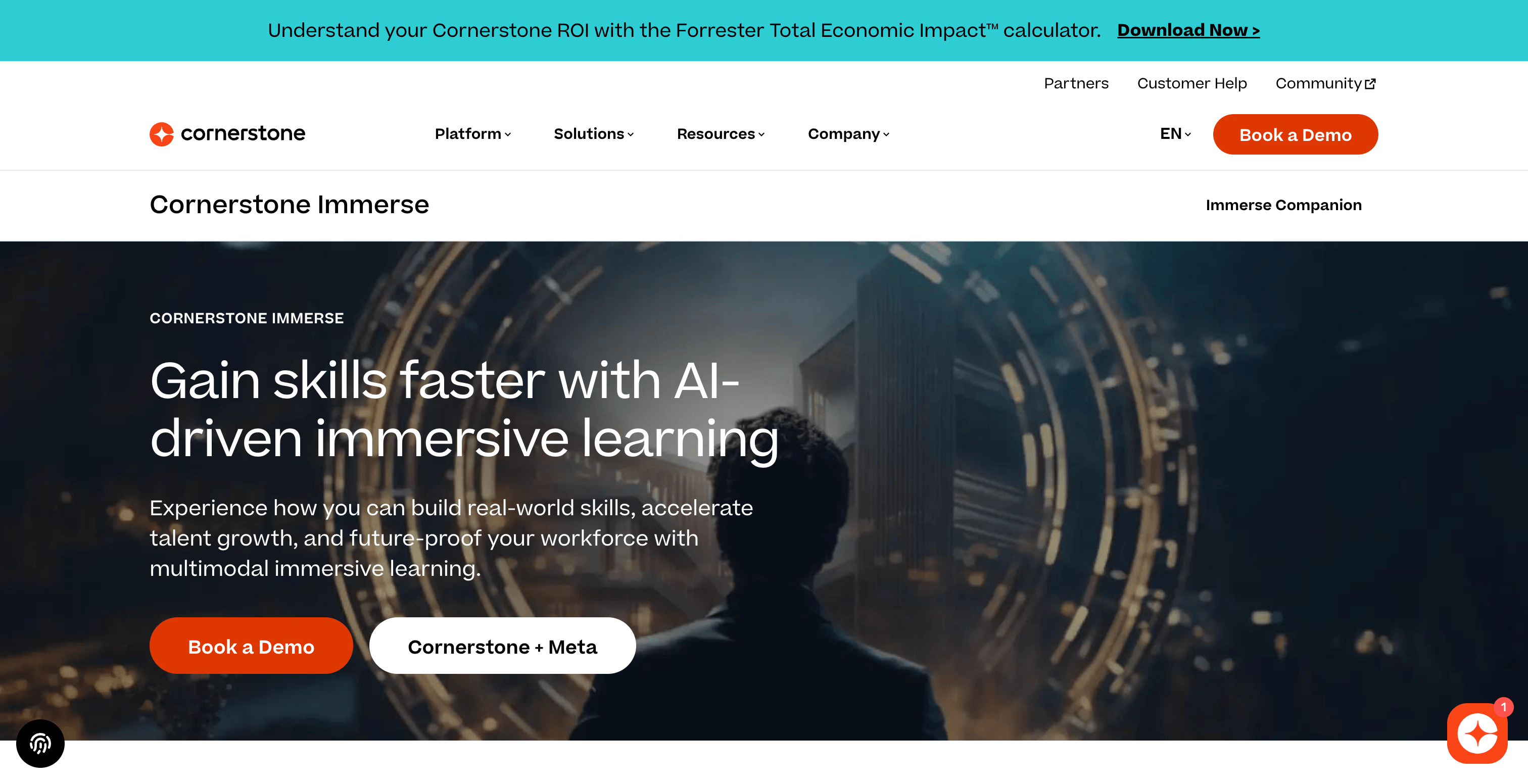
Cornerstone focuses on workforce training and skills mobility, which gives the list a more enterprise-software angle. Its own positioning centers on a spatial computing platform for immersive learning, and Accenture publicly invested in the company while describing the platform as an end-to-end system for creating, distributing, and measuring immersive content.
What stands out is the operational use case. Cornerstone is less about spectacle and more about repeatable training outcomes, which can make it a smarter choice when the goal is adoption inside a large organization rather than a one-time public launch.
.png)
vrisch brings a smaller, more boutique perspective. The company calls itself a VR, AR, mixed reality, and spatial computing agency, and its public client page shows brands and institutions such as EGLO, Madame Tussauds, ProSieben, Baumit, and Austrian infrastructure and tourism names. That makes it one of the best spatial computing companies for teams that want a more hands-on studio relationship.
Its history also helps. Founded in Vienna in 2015, vrisch combines creative production backgrounds with technical XR execution, which usually works well when a project needs both strong communication design and reliable delivery — not one without the other.
.png)
Zappar earns its place because it combines tools, platform infrastructure, and creative support in one ecosystem. Its site positions Zapworks and Mattercraft as a full XR stack for AR, VR, MR, WebXR, and 3D web experiences, backed by 15+ years in immersive tech. That makes it one of the leading spatial computing development studios to consider if browser-based delivery and scalable tooling matter as much as custom builds.
The enterprise offer is also unusually practical. Zappar talks in terms of global delivery, team collaboration, AR strategy, Apple Vision Pro and WebXR support, and dedicated creative help — which is often more useful than a studio that only hands over code.
The best fit depends on the job. Enterprise software teams may lean toward Treeview, SoftServe, or Talespin, while immersive brand and product work may point more naturally to Magnopus, PHORIA, or vrisch. If platform flexibility matters most, Zappar changes the calculation quickly and belongs in any conversation about the best spatial computing companies.
A strong shortlist mixes shipped proof, technical depth, and a delivery model that matches your team. The best spatial computing development companies are not simply the loudest names — they are the ones that can take a spatial idea from concept to something people actually use.
.jpg)
Spatial projects can look polished in a demo and still fall apart in production. The firms worth shortlisting know how to manage interaction design, 3D assets, device limits, and rollout details without turning the job into a drawn-out experiment. That is what separates the best spatial computing development companies from teams that only sell the idea.
A quick way to frame what is spatial computing is this: software that understands space, objects, and movement well enough to place digital content into the physical world in useful ways. The market is wider now, so the shortlist below mixes enterprise builders, immersive product teams, and platform-driven players instead of copying one directory’s order of the top spatial computing development companies.
Treeview is a strong first pick because it is built around enterprise XR rather than campaign work alone. Its site puts spatial computing software front and center, with client signals that include Microsoft, Meta, Medtronic, ULTA Beauty, Daiichi Sankyo, Transfr, the University of Alberta, and NEOM. That gives it unusually solid proof for buyers comparing the top spatial computing development companies.
The studio’s pitch is clear: senior-led delivery, startup speed, and long-term partnership. Public case-study titles also point to practical work such as digital twin visualization, cultural preservation, and AR navigation — not just flashy prototypes.
SoftServe brings a larger consulting and engineering profile to the list. Its XR and spatial computing practice ties immersive work to internal operations, product delivery, robotics, IoT, and NVIDIA Omniverse, which makes it one of the best spatial computing companies for enterprise programs that need more than a standalone app.
That broader systems angle is the draw. SoftServe looks strongest when spatial work has to connect with existing workflows, data, and infrastructure — especially in industrial or operational settings where isolated demos are not enough.
Magnopus comes from the immersive production side, but its portfolio makes it hard to ignore. The studio describes itself as a builder of ambitious immersive experiences across entertainment, education, and adjacent sectors, and its public projects include Meta, Disney, Nissan, the Academy Museum, and Fallout-linked work. That makes it one of the leading spatial computing development studios for brands that want real technical depth with strong creative execution.
Its strength is range across formats and platforms. Magnopus is a better fit when the brief spans mixed reality, real-time environments, and shared interactive worlds rather than a single narrow use case.
PHORIA adds another flavor to the shortlist. The studio presents itself around AR, VR, MR, XR, digital twins, and installations, and public project signals include collaborations tied to Netflix, Google, OnePlus, and Meta. That mix gives it a credible place on this list without making the selection feel like the usual agency circuit.
The appeal here is how comfortably it moves between storytelling and technical build work. PHORIA feels strongest when a project has to be visually sharp, interactive, and grounded in a real deployment plan — not just a concept film.
Cornerstone focuses on workforce training and skills mobility, which gives the list a more enterprise-software angle. Its own positioning centers on a spatial computing platform for immersive learning, and Accenture publicly invested in the company while describing the platform as an end-to-end system for creating, distributing, and measuring immersive content.
What stands out is the operational use case. Cornerstone is less about spectacle and more about repeatable training outcomes, which can make it a smarter choice when the goal is adoption inside a large organization rather than a one-time public launch.
vrisch brings a smaller, more boutique perspective. The company calls itself a VR, AR, mixed reality, and spatial computing agency, and its public client page shows brands and institutions such as EGLO, Madame Tussauds, ProSieben, Baumit, and Austrian infrastructure and tourism names. That makes it one of the best spatial computing companies for teams that want a more hands-on studio relationship.
Its history also helps. Founded in Vienna in 2015, vrisch combines creative production backgrounds with technical XR execution, which usually works well when a project needs both strong communication design and reliable delivery — not one without the other.
Zappar earns its place because it combines tools, platform infrastructure, and creative support in one ecosystem. Its site positions Zapworks and Mattercraft as a full XR stack for AR, VR, MR, WebXR, and 3D web experiences, backed by 15+ years in immersive tech. That makes it one of the leading spatial computing development studios to consider if browser-based delivery and scalable tooling matter as much as custom builds.
The enterprise offer is also unusually practical. Zappar talks in terms of global delivery, team collaboration, AR strategy, Apple Vision Pro and WebXR support, and dedicated creative help — which is often more useful than a studio that only hands over code.
The best fit depends on the job. Enterprise software teams may lean toward Treeview, SoftServe, or Talespin, while immersive brand and product work may point more naturally to Magnopus, PHORIA, or vrisch. If platform flexibility matters most, Zappar changes the calculation quickly and belongs in any conversation about the best spatial computing companies.
A strong shortlist mixes shipped proof, technical depth, and a delivery model that matches your team. The best spatial computing development companies are not simply the loudest names — they are the ones that can take a spatial idea from concept to something people actually use.


