.svg)
In the rapidly evolving world of artificial intelligence, AI-powered search engines like Google's AI Overviews, Perplexity, and ChatGPT have transformed how users access information. No longer do people rely solely on clicking through lists of blue links; instead, they receive synthesized, conversational answers directly from AI models. This shift has profound implications for how we measure success in search performance. Yet, many marketers, SEO specialists, and business leaders cling to outdated metrics, chief among them being website traffic. This article busts the myths surrounding traffic as a key performance indicator (KPI) for AI search, drawing on insights from industry experts and recent data to reveal why it's misleading—and what to measure instead.
As we approach the end of the 2020s, with AI handling an estimated 60% of searches in zero-click formats in the US and Europe, it's time to rethink our dashboards. Traffic, once the holy grail of digital success, now often tells a distorted story. Let's debunk the common myths and pave the way for more accurate, AI-aligned metrics.
One of the most persistent myths is that higher traffic volumes directly indicate superior AI search performance. In the pre-AI era, this made sense: more visits equaled more eyes on content, more ad impressions, and potentially more conversions. But in AI-driven search, this assumption crumbles.
Reality: AI search engines prioritize delivering complete answers upfront, often without requiring users to click through to source websites. This "zero-click" phenomenon, where queries are resolved entirely within the AI interface, has led to significant traffic declines for many sites — up to 60% in some cases — despite stable or even improved rankings. For instance, news publishers anticipate a 43% drop in search traffic by 2029, largely due to AI summaries siphoning clicks. Yet, this doesn't mean performance is worsening; it means the game has changed.
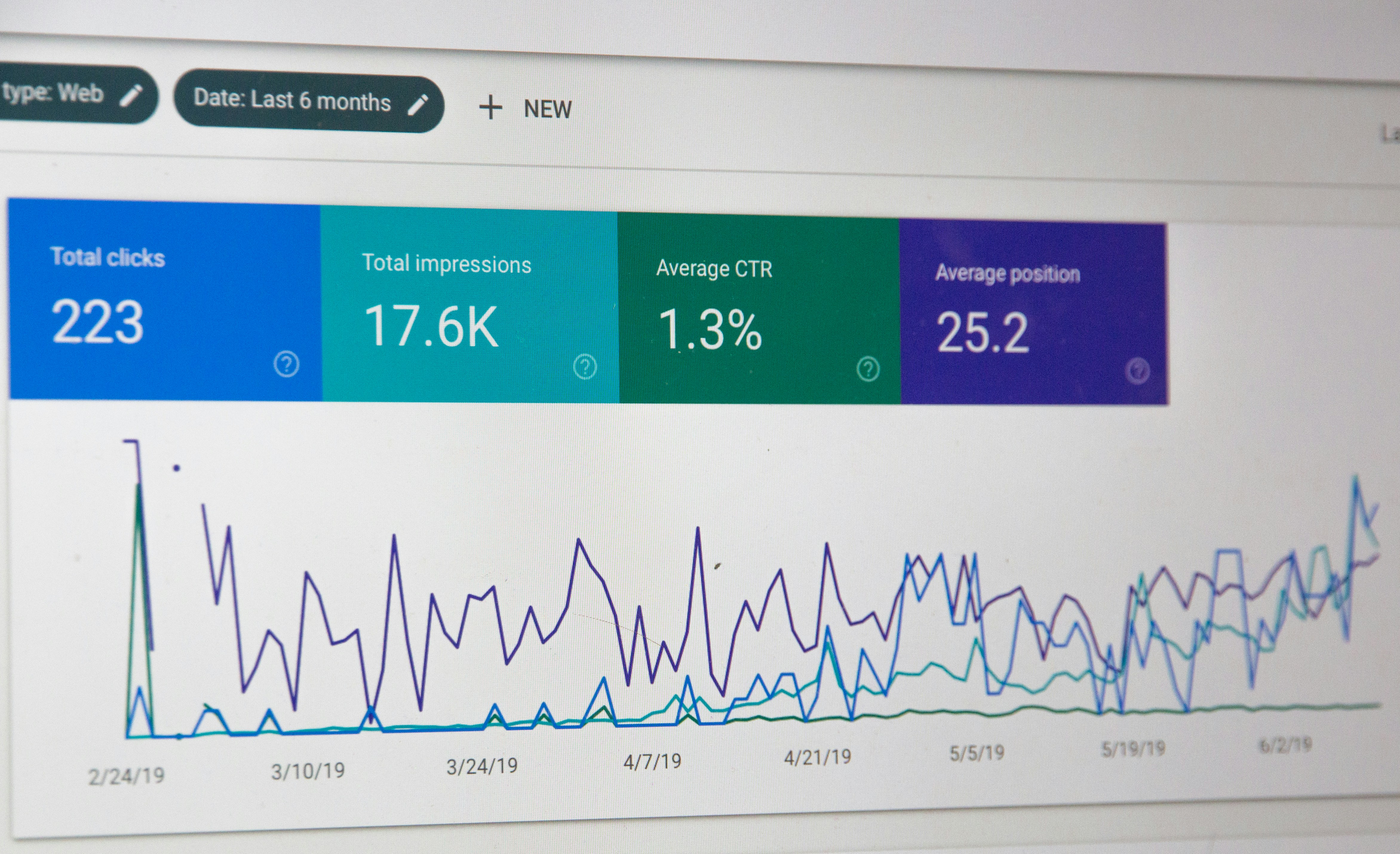
Consider how AI overviews push traditional results lower on the page, reducing click-through rates (CTR) from organic listings. Impressions might spike, sometimes doubling, as AI scans more content, but actual visits plummet because users get what they need from the summary. SEO expert Duane Forrester notes that historical benchmarks like 30-35% CTR for top rankings are obsolete, with real rates now varying wildly from 5% to 40% depending on SERP features. Traffic dips aren't a sign of failure; they're a symptom of AI efficiency.
Moreover, traffic from AI can skew analytics. In Google Analytics, AI referrals are often misclassified as organic, direct, or referral traffic, inflating or obscuring true sources. This noise makes year-over-year comparisons unreliable, especially when comparing pre- and post-AI eras. Brands fixating on traffic miss the silver lining: fewer but higher-quality visits. As one SEO consultant observes, "impressions and conversions are actually up, even though clicks may be down." In essence, chasing traffic ignores AI's core value — providing answers, not just links.
Another widespread myth is that classic SEO KPIs, such as search rankings, CTR, and page views, remain reliable for evaluating AI search. Many teams assume that holding a #1 spot guarantees success, just as it did in traditional Google searches.
Reality: AI search operates on a different paradigm, where rankings are fluid and often invisible. Unlike traditional SERPs, AI doesn't always display a linear list; it generates responses by retrieving and synthesizing "chunks" of content from vector databases. Position-based metrics break down because there's no fixed "rank" — success hinges on whether your content is retrieved and cited in the AI output.
For example, even with stable visibility and rankings, traffic can plummet due to AI's preference for concise summaries. Studies show that AI overviews appear in about 10% of U.S. searches, boosting zero-click behavior and deprioritizing organic listings visually. CTR benchmarks are "broken," as AI agents complete tasks without visits, making attribution murky. In generative AI, prompts replace keywords, rendering keyword-only tracking incomplete.
This myth leads to misguided strategies. Teams might optimize for rankings only to see traffic evaporate because AI favors authoritative, modular content over link-heavy pages. As Gartner predicts, brands could face 50% or greater organic traffic declines by 2028 due to AI answers. The flaw? These metrics measure access, not influence. In AI, your content might shape answers without driving visits, building brand recall indirectly. Relying on them paints an incomplete picture, ignoring how AI "reads" and repurposes content before humans do.
Perhaps the most dangerous myth is that traffic volume is a proxy for revenue or overall success. If traffic is up, the thinking goes, so are sales, ads, or engagement — making it the ultimate bottom-line KPI.
Reality: In AI search, quantity doesn't equal quality. High traffic can be "empty" if it doesn't drive conversions, while low traffic from AI-influenced users might yield better results. AI-driven discoveries often lead to more qualified visits: users who've already gotten initial answers from AI arrive with higher intent, spending more time on page or converting faster.
Data shows that zero-click rates have only risen modestly (from 38.1% to 36.2%), suggesting users still seek deeper content. But for transactional queries, AI provides enough to deter clicks, yet builds trust through citations. Chat referrals grow, but they're a "rounding error" compared to traditional search — focusing on traffic misses emerging revenue from AI ecosystems.
Moreover, AI skews data scarcity: no clear metrics in Google Search Console for AI modes, and referrals from tools like ChatGPT are inconsistent. This makes traffic an unreliable revenue predictor. Instead, success lies in influence without clicks — brand mentions in AI responses can drive indirect conversions, like increased brand searches or loyalty. As one analyst puts it, "traffic is the core performance proxy" in old SEO, but in AI, "influence can exist without clicks." Businesses shifting to engagement and conversion metrics report sustained growth despite traffic drops.
Busting these myths reveals the need for a new KPI stack tailored to AI search. Experts advocate for metrics that capture visibility, authority, and quality in generative environments. Here are key alternatives:
Implementing these requires tools like Google Analytics for engagement, specialized AI monitors for citations, and custom dashboards. Start by segmenting data by query intent —informational vs. transactional — to pinpoint AI impacts. Fairness metrics, like bias in responses, ensure ethical performance.
Traffic as a KPI for AI search performance is a relic of the past, perpetuating myths that hinder adaptation. By debunking these misconceptions, we see that true success lies in influence, quality, and indirect value — not raw visits. As AI evolves, adopting metrics like citations, retrieval scores, and SOV will empower brands to thrive. Don't panic over dips; evolve your measurement strategy. In 2026 and beyond, the winners will be those who measure what AI truly delivers: answers that build lasting impact.
In the rapidly evolving world of artificial intelligence, AI-powered search engines like Google's AI Overviews, Perplexity, and ChatGPT have transformed how users access information. No longer do people rely solely on clicking through lists of blue links; instead, they receive synthesized, conversational answers directly from AI models. This shift has profound implications for how we measure success in search performance. Yet, many marketers, SEO specialists, and business leaders cling to outdated metrics, chief among them being website traffic. This article busts the myths surrounding traffic as a key performance indicator (KPI) for AI search, drawing on insights from industry experts and recent data to reveal why it's misleading—and what to measure instead.
As we approach the end of the 2020s, with AI handling an estimated 60% of searches in zero-click formats in the US and Europe, it's time to rethink our dashboards. Traffic, once the holy grail of digital success, now often tells a distorted story. Let's debunk the common myths and pave the way for more accurate, AI-aligned metrics.
One of the most persistent myths is that higher traffic volumes directly indicate superior AI search performance. In the pre-AI era, this made sense: more visits equaled more eyes on content, more ad impressions, and potentially more conversions. But in AI-driven search, this assumption crumbles.
Reality: AI search engines prioritize delivering complete answers upfront, often without requiring users to click through to source websites. This "zero-click" phenomenon, where queries are resolved entirely within the AI interface, has led to significant traffic declines for many sites — up to 60% in some cases — despite stable or even improved rankings. For instance, news publishers anticipate a 43% drop in search traffic by 2029, largely due to AI summaries siphoning clicks. Yet, this doesn't mean performance is worsening; it means the game has changed.
Consider how AI overviews push traditional results lower on the page, reducing click-through rates (CTR) from organic listings. Impressions might spike, sometimes doubling, as AI scans more content, but actual visits plummet because users get what they need from the summary. SEO expert Duane Forrester notes that historical benchmarks like 30-35% CTR for top rankings are obsolete, with real rates now varying wildly from 5% to 40% depending on SERP features. Traffic dips aren't a sign of failure; they're a symptom of AI efficiency.
Moreover, traffic from AI can skew analytics. In Google Analytics, AI referrals are often misclassified as organic, direct, or referral traffic, inflating or obscuring true sources. This noise makes year-over-year comparisons unreliable, especially when comparing pre- and post-AI eras. Brands fixating on traffic miss the silver lining: fewer but higher-quality visits. As one SEO consultant observes, "impressions and conversions are actually up, even though clicks may be down." In essence, chasing traffic ignores AI's core value — providing answers, not just links.
Another widespread myth is that classic SEO KPIs, such as search rankings, CTR, and page views, remain reliable for evaluating AI search. Many teams assume that holding a #1 spot guarantees success, just as it did in traditional Google searches.
Reality: AI search operates on a different paradigm, where rankings are fluid and often invisible. Unlike traditional SERPs, AI doesn't always display a linear list; it generates responses by retrieving and synthesizing "chunks" of content from vector databases. Position-based metrics break down because there's no fixed "rank" — success hinges on whether your content is retrieved and cited in the AI output.
For example, even with stable visibility and rankings, traffic can plummet due to AI's preference for concise summaries. Studies show that AI overviews appear in about 10% of U.S. searches, boosting zero-click behavior and deprioritizing organic listings visually. CTR benchmarks are "broken," as AI agents complete tasks without visits, making attribution murky. In generative AI, prompts replace keywords, rendering keyword-only tracking incomplete.
This myth leads to misguided strategies. Teams might optimize for rankings only to see traffic evaporate because AI favors authoritative, modular content over link-heavy pages. As Gartner predicts, brands could face 50% or greater organic traffic declines by 2028 due to AI answers. The flaw? These metrics measure access, not influence. In AI, your content might shape answers without driving visits, building brand recall indirectly. Relying on them paints an incomplete picture, ignoring how AI "reads" and repurposes content before humans do.
Perhaps the most dangerous myth is that traffic volume is a proxy for revenue or overall success. If traffic is up, the thinking goes, so are sales, ads, or engagement — making it the ultimate bottom-line KPI.
Reality: In AI search, quantity doesn't equal quality. High traffic can be "empty" if it doesn't drive conversions, while low traffic from AI-influenced users might yield better results. AI-driven discoveries often lead to more qualified visits: users who've already gotten initial answers from AI arrive with higher intent, spending more time on page or converting faster.
Data shows that zero-click rates have only risen modestly (from 38.1% to 36.2%), suggesting users still seek deeper content. But for transactional queries, AI provides enough to deter clicks, yet builds trust through citations. Chat referrals grow, but they're a "rounding error" compared to traditional search — focusing on traffic misses emerging revenue from AI ecosystems.
Moreover, AI skews data scarcity: no clear metrics in Google Search Console for AI modes, and referrals from tools like ChatGPT are inconsistent. This makes traffic an unreliable revenue predictor. Instead, success lies in influence without clicks — brand mentions in AI responses can drive indirect conversions, like increased brand searches or loyalty. As one analyst puts it, "traffic is the core performance proxy" in old SEO, but in AI, "influence can exist without clicks." Businesses shifting to engagement and conversion metrics report sustained growth despite traffic drops.
Busting these myths reveals the need for a new KPI stack tailored to AI search. Experts advocate for metrics that capture visibility, authority, and quality in generative environments. Here are key alternatives:
Implementing these requires tools like Google Analytics for engagement, specialized AI monitors for citations, and custom dashboards. Start by segmenting data by query intent —informational vs. transactional — to pinpoint AI impacts. Fairness metrics, like bias in responses, ensure ethical performance.
Traffic as a KPI for AI search performance is a relic of the past, perpetuating myths that hinder adaptation. By debunking these misconceptions, we see that true success lies in influence, quality, and indirect value — not raw visits. As AI evolves, adopting metrics like citations, retrieval scores, and SOV will empower brands to thrive. Don't panic over dips; evolve your measurement strategy. In 2026 and beyond, the winners will be those who measure what AI truly delivers: answers that build lasting impact.
.jpg)